Bamyeh (Okra) Seeds
Bamyeh (Okra) Seeds
Couldn't load pickup availability
20 seeds
Abelmoschus esculentus
Grown by: True Love Seeds, Philadelphia, PA
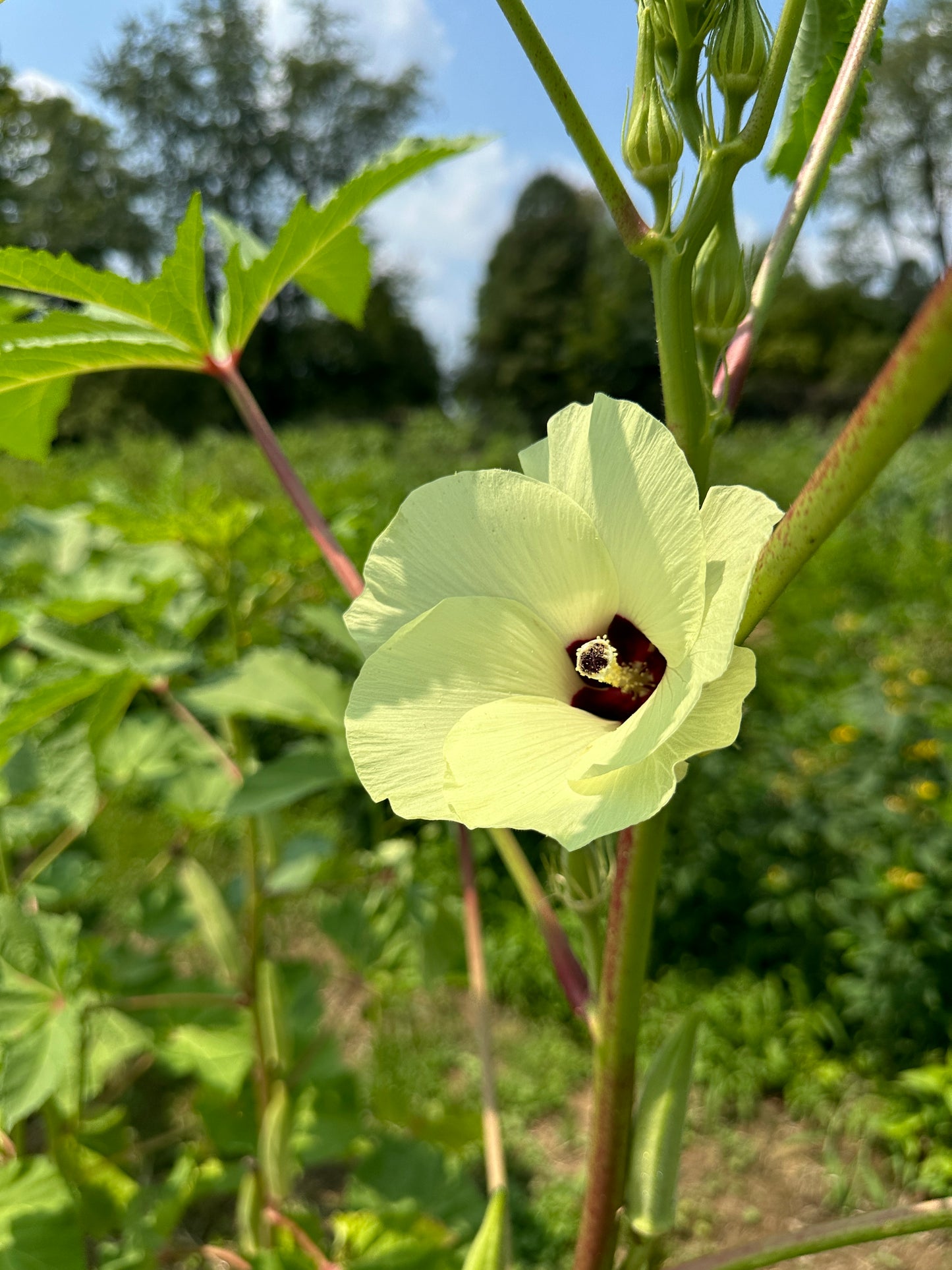
This magical summer crop comes from the Palestinian plains — though, like many other crops, its deeper roots lie in Africa. Our okra grows tall, with humble, medium-sized dark-green pods, some with faint greyish stripes along the ribs. This is a landrace variety containing some evident diversity, not only in form but also in phenology: some of the plants begin producing pods quite early, while others take their time. This helps farmers have a longer season.
Our okra is a Ba’al (rain-fed) summer variety typically planted in Palestine on St. George’s Day (May 8th). Ba’al is an ancient cultivation tradition in which no irrigation is used. The crop is entirely dependent on the moisture retained in the soil from the rainy season through the summer. Ba’al agriculture was developed in the Fertile Crescent, of which Palestine is the Western arm. The name comes from the Canaanite deity of fertility and destruction, who has a spiritual connection to the contemporary Christian St. George (referred to in Arabic as “Khader el Akhdar,” or “St. George The Green”). Khader is a highly revered saint in Palestine for both Christians and Muslims alike and he is considered the saint of generosity, abundance, and agriculture.
Growing Instructions for Turtle Island: Bamyeh, or Okra, prefers full sun and heat as it is a hot-weather crop and will react poorly to cooler weather conditions. This particular variety will vary in height once mature, ranging from 3-9 feet tall. Sow seeds indoors 2-3 weeks before transplanting, which should happen several weeks after the last frost, or when soil temperatures stay consistently above 65 degrees Fahrenheit. Soak seeds overnight for quicker germination. Plant seeds ¾ inch deep with seeds 18 inches apart in rows 12-18 inches apart. Beds should be at least 3 feet apart as plants tend to bush out widely. Okra tends to prefer fertile soil that is well-drained (additional compost is recommended). In longer-season areas, you can direct-sow seeds with good results. Harvest fresh pods regularly to encourage maximum production. This variety of okra tastes best when harvested around 2-3 inches in size (smaller than most okra varieties).
If growing for seed: okra is insect pollinated and different varieties should be isolated by at least ⅛ of a mile (or up to ½ mile to be sure you are maintaining trueness to type). Plants being grown for seed can be given a bit more spacing.
Share