Abu Samara (Wheat) Seeds
Abu Samara (Wheat) Seeds
Couldn't load pickup availability
Triticum spp.
Grown by: Hardy Seeds, Oregon, USA
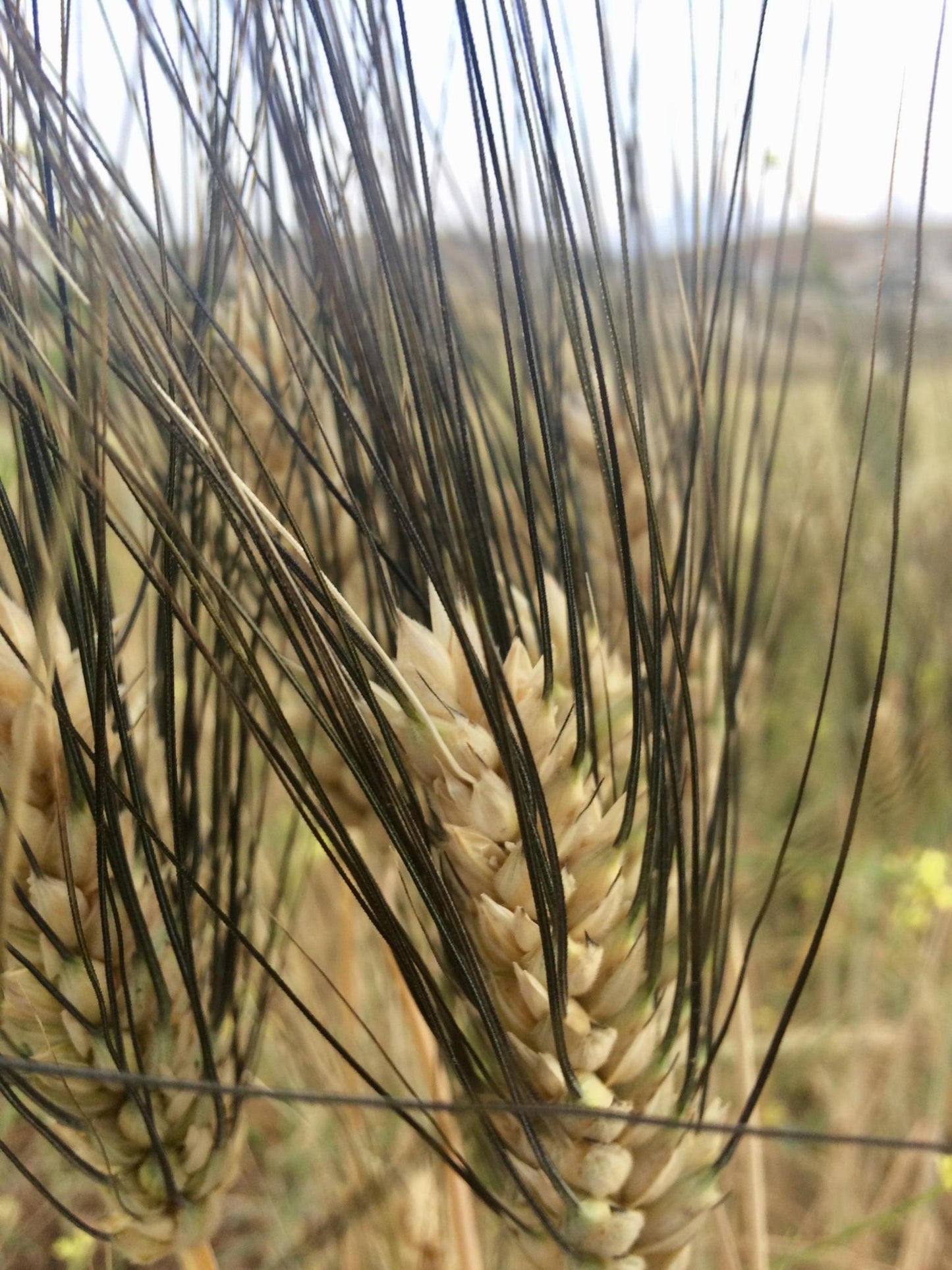
This heirloom Ba’al (rain-fed) wheat variety is the long lost love of Palestinian wheats. Known to many as Abu Samara — the dark and handsome one — because this wheat bears stunning black whiskers (or “awns”), it is more officially known as “Habeh Soda.” It grows on short/medium-sized plants, putting most of its energy into seed production, while many other old varieties of wheat produce long straw as well. Its cultivation has diminished greatly due to pressure on farmers to grow modern industrial wheat varieties, but its return is welcomed with deep love by farmers and older Palestinians who remember the cake-like bread made from its light brown grains.
Abu Samara is a winter variety, well-adapted to Palestine’s dry climate. It is planted in late fall or early winter and harvested with a sickle in mid-summer. To make freekeh (Palestine’s famous toasted green wheat), plants are harvested in April or May, the grain-heads are then thrown into fire to toast, and then rubbed between palms so that the husks may be winnowed away. It is then cracked and cooked as rice to accompany stews or for use in salads.
Palestine composes the Western rim of the Fertile Crescent, which is the center of diversity for both wheat and barley. This means both crops were likely domesticated there, and their wild relatives (the ancestors of their domesticated cousins) can still be found growing wild in the hills and valleys of Palestine. In many ways, wheat made modern human culture possible. It’s not a coincidence that major markers of human civilization — written language, the wheel, glass, irrigation, and indeed agriculture itself — were first developed in our region. Wheat may be the greatest gift left to us by our ancestors — and Abu Samara is one of its best examples.
~ 25 seeds per packet
Growing instructions for Turtle Island: Abu Samara is a winter wheat in Palestine but has grown best in Spring in the US (direct-sown around last frost or started in flats a couple weeks prior). In warmer regions (Zone 6 or 7 or higher) it can be sown in early fall. Can be planted 3-6 inches apart (or more, if you don't mind weeding) or broadcasted. Use row cover to protect from pests if you find it’s getting nibbled at earlier stages. Grows best in well-drained soils and doesn’t require much irrigation once established.
Share